
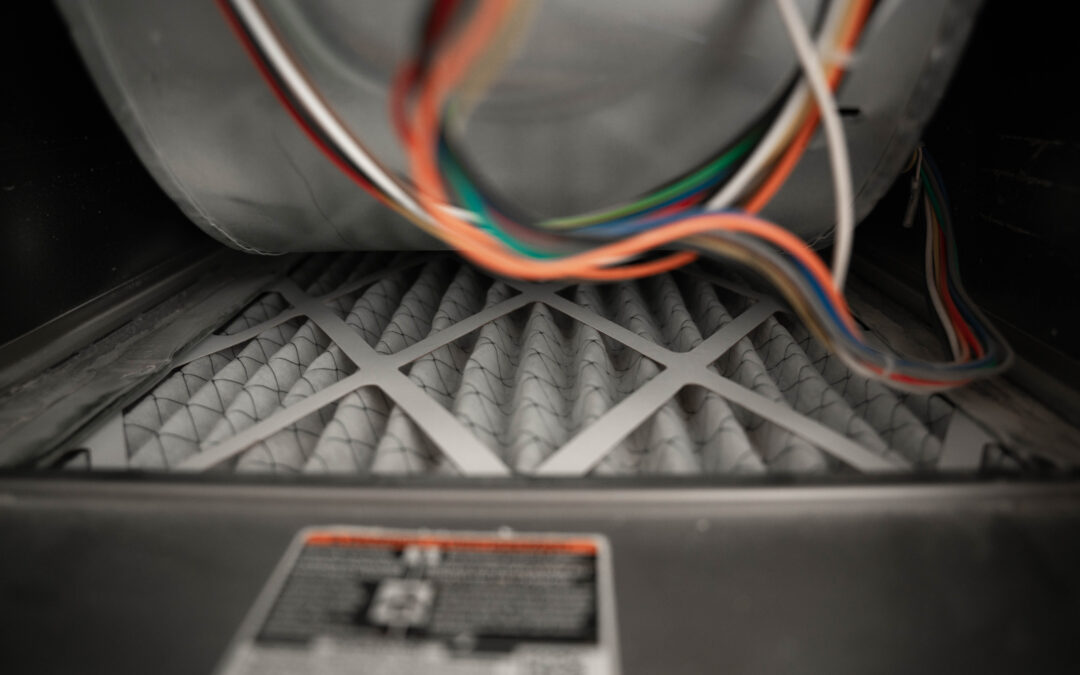
Homeownership comes with many freedoms and conveniences, but those go hand in hand with complex responsibilities that can feel overwhelming. Take heating and air conditioning as an example. If you want your HVAC system to keep your family warm in the winter and cool in the summer, you need to make sure it stays in working condition. That job brings a whole world of questions: Who will I call for repairs? What can I do on my own to prolong the system’s life? And what the heck is a MERV rating?
Fortunately, answers to all these questions are readily available. MERV stands for Minimum Efficiency Reporting Value, and it’s based on a national consensus standard. It measures the size of particles HVAC filters remove from the air in the system, with MERV 1 only being able to trap coarse debris, and MERV 16 being the grade many hospitals use to filter bacteria and virus carriers.
If you’re trying to figure out the best MERV for HVAC filters in your home, here’s a quick rundown of everything you need to know.
Different MERV Ratings and What They Filter
MERV 1–6 can filter larger particles, such as:
- Coarse dust
- Lint
- Carpet/textile fibers
These filters are on the lowest range of the MERV scale, and are generally the cheapest ones you can find. They’re typically only used in industrial workplaces and in old systems that can’t handle the airflow restriction of more efficient filters. However, for the great majority of situations, I wouldn’t recommend using these. For most residential homes, using a filter rated MERV 5 or lower is almost like not using a filter at all.
MERV 7–12 can trap more particles on the smaller end, such as:
- Fine dust
- Pet dander
- Pollen
- Mold spores
MERV 8 is the rating we recommend for most homes. That’s because it strikes a great balance between effective filtration and good airflow in the system. When a filter’s MERV rating is higher, it puts more strain on the blower motor as it tries to push air through the material. For this reason, there’s little point in going above MERV 10 unless you have someone in the household with severe allergies or unique respiratory needs.
Don’t forget that mid-range, 1-inch filters need an HVAC air filter replacement every 2–3 months to keep the system clean and allow for proper airflow.
MERV 13–16 are classified as high-efficiency filters. They can remove extremely small particles, including:
- Smoke particles
- Bacteria and virus carriers
- Cough and sneeze debris
High-efficiency filters can be very helpful–even essential–for households with immunocompromised, asthmatic, or severely allergic residents. However, for homes without those needs, they’re usually overkill. Moreover, not all HVAC systems are built to handle them.
Why A Higher-Efficiency Filter Isn’t Always Better
A higher-efficiency filter might sound like a good way to keep your home’s air fresh and HVAC system functioning smoothly, but in many houses, that isn’t really the case. It turns out, if your filter is too thick for the unit to handle, the system will use more power than it should and strain the blower motor trying to keep the airflow going. This shortens the life of your system and increases the likelihood of parts failing.
When airflow is too restricted and doesn’t move fast enough over the coils, the unit freezes over and doesn’t work properly. But freezing doesn’t just happen when the filter’s too thick–even an appropriately rated filter can clog the system if it isn’t changed regularly.
If you have questions about what kind of MERV rating AC filters need for your HVAC system and lifestyle, consult a licensed technician.
CSA HVAC Services Helps Homeowners Customize their Comfort
At CSA HVAC Services, we’ve been helping Utah homeowners personalize their comfort for over a decade. Our HVAC filter replacement service is just one part of our comprehensive approach to heating and air conditioning repair and maintenance.
If you’re looking for professional workmanship and neighborly guidance for your HVAC needs, we service the greater central Utah area. Call (801) 874-5686 or fill out the contact form here on our website to schedule your free consultation today!